Non-urgent advice: Routine & Non-Urgent Appointments
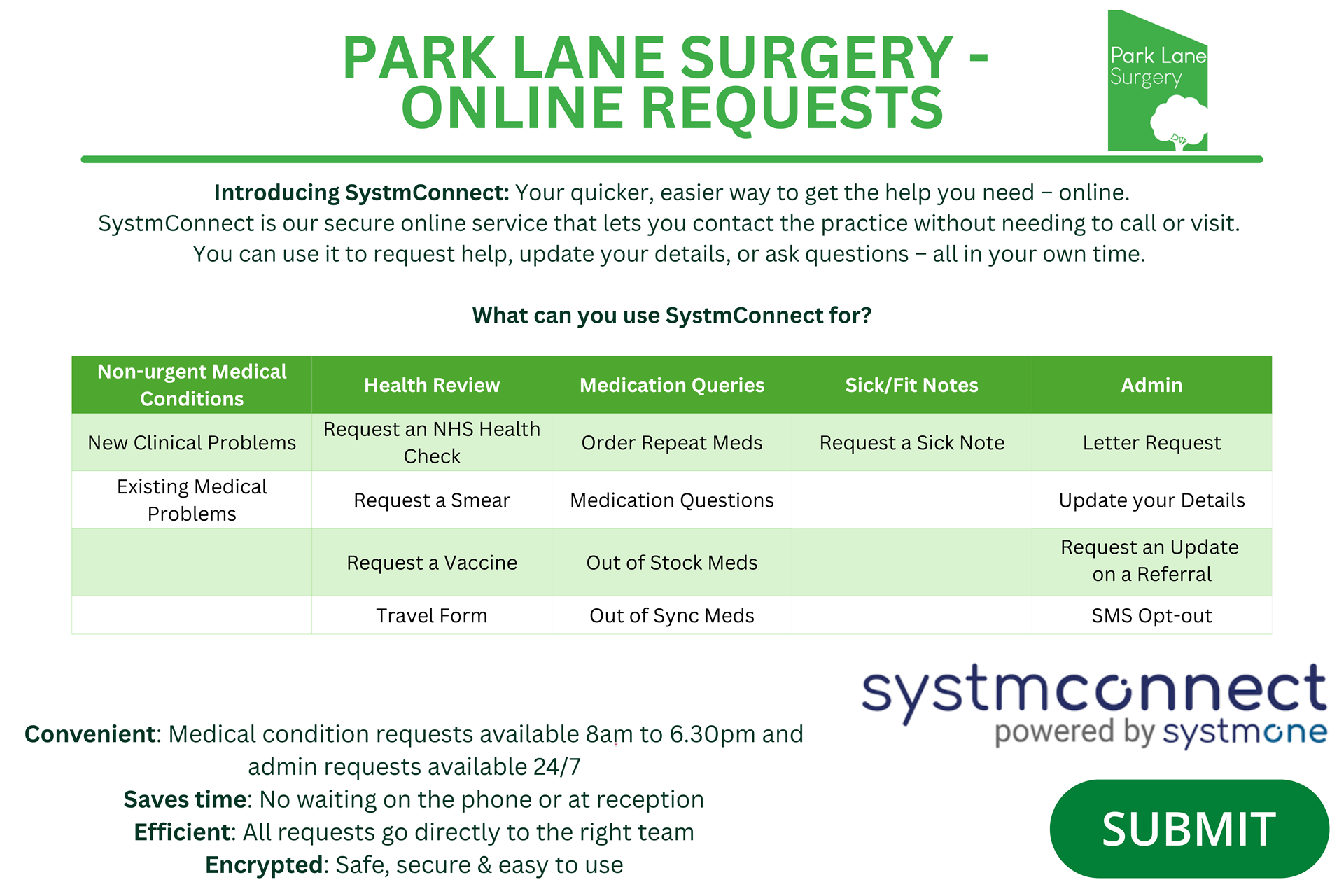
We’ve introduced SystmConnect, replacing eConsult, to make it easier for you to contact the practice for medical or administrative support. If you’re not very familiar with online services, don’t worry — we’ve put together a simple guide with clear instructions and answers to common questions.
Visit our SystmConnect Information & FAQs page to learn how it works, what you can use it for, and how it can save you time: https://stillingtondoctors.co.uk/systmconnect
Urgent advice: IMPORTANT INFORMATION
Urgent Appointments: Urgent appointments can be requested by calling the practice or attending the surgery. Urgent appointment requests must not be submitted using electronic or online services. See our contact us page for help getting in touch.
Changes and Cancellations: If you can't make it to your appointment, get in touch with the practice as soon as you can. This way, someone else can take that appointment. If you got a text reminder, you can cancel by following the instructions in the message. If you use online services, you can also cancel through your Patient Access account.
Appointment Notifications: We send confirmations, reminders, and other important information through text messages. If you don't want to get texts from us, just let the Reception Staff know, and they'll update your record. To make sure we can do this - please keep your contact details up to date with us.
Being Late: Be on time for your appointment. If you're more than halfway through your allocated time, the doctor might not be able to see you. If you miss your appointment, you'll have to wait until the next working day to reschedule, unless it's a medical emergency.
Please tell us: If you need an interpreter or have unique communication needs for your appointment, if there’s a specific doctor, nurse or other health professional you would prefer to see and if you would prefer to consult with the doctor or nurse by phone, face-to-face or by video call. Let the receptionist know when you book.
Home Visits: Patients who require a home visit need to call the Practice before 10.30am. The Receptionist will need to ask some questions about your symptoms so that this information can be passed to the Doctor who will assess your request. We request that, all other patients attend the surgery apart from the genuinely housebound, rather than request a home visit because of the extra time home visiting takes. On average 4 to 5 patients can be seen in the practice during the time it takes to do 1 home visit. Also, better care could be available at the practice due to better lighting, examination facilities and equipment. Please note that the doctor will decide whether or not a visit is appropriate and may telephone you rather than visit if deemed appropriate by the doctor.
Teaching and Training: As a Training/Teaching Practice we have a commitment to the education and training of GP Registrars and Medical Students. You will always be asked if you consent to a student being present during your consultation. Click here for more information about the training our practice provides.
Non-urgent advice: The right person will see you now.
Here at Park Lane Surgery we have a range of skilled and qualified staff working alongside our GPs, available to see patients. As a result, our receptionists may ask you a few questions related to your query to make sure you get the right treatment, this could be with a GP or a different member of the healthcare team:
Practice Nurse - Practice nurses work in our practices to assess, screen, treat and educate patients, and help doctors give medical care.
Healthcare Assistant - Healthcare assistants are available to provide patients with a range of medical services including dressings, administer vaccines, ECG's, blood pressure readings, health checks, weight/BMI amongst other services.
Clinical Pharmacist - We have clinical pharmacists working for our practice who are here to help with things like medication reviews, health checks (e.g. blood pressure) and medication queries and changes.
Mental Health Practitioner - Our mental health practitioners (for adults and children) are on hand to provide emotional and practical support and improve access to relevant mental health services and they allow for longer appointments.
Social Prescribers - Are on hand to connect patients (adults and children) with non-medical support, empowering them to address issues beyond the clinical setting to enhance overall health and wellbeing which might include support with finances, work, emotional wellbeing and loneliness.
First Contact Practitioner - Sometimes people get mixed up and call this a “physio”, but If you haven't already consulted a GP about a specific musculoskeletal issue, this might be the right clinician for you to see. As a first contact practitioner, they conduct thorough assessments and offer personalised treatment plans for conditions affecting the muscles, bones, joints, and soft tissues and refer for x-rays and other treatments.
Physician Associate - Physician Associates (PA's) work as part of our team with supervision from a named senior doctor, providing care to patients at our practice and in home and care home environments.
Non-urgent advice: Evening and Weekend Appointments (Enhanced Access)
You can pre-book appointments around your busy daily schedules and appointments are available 7 days a week.
Click Here for more information.